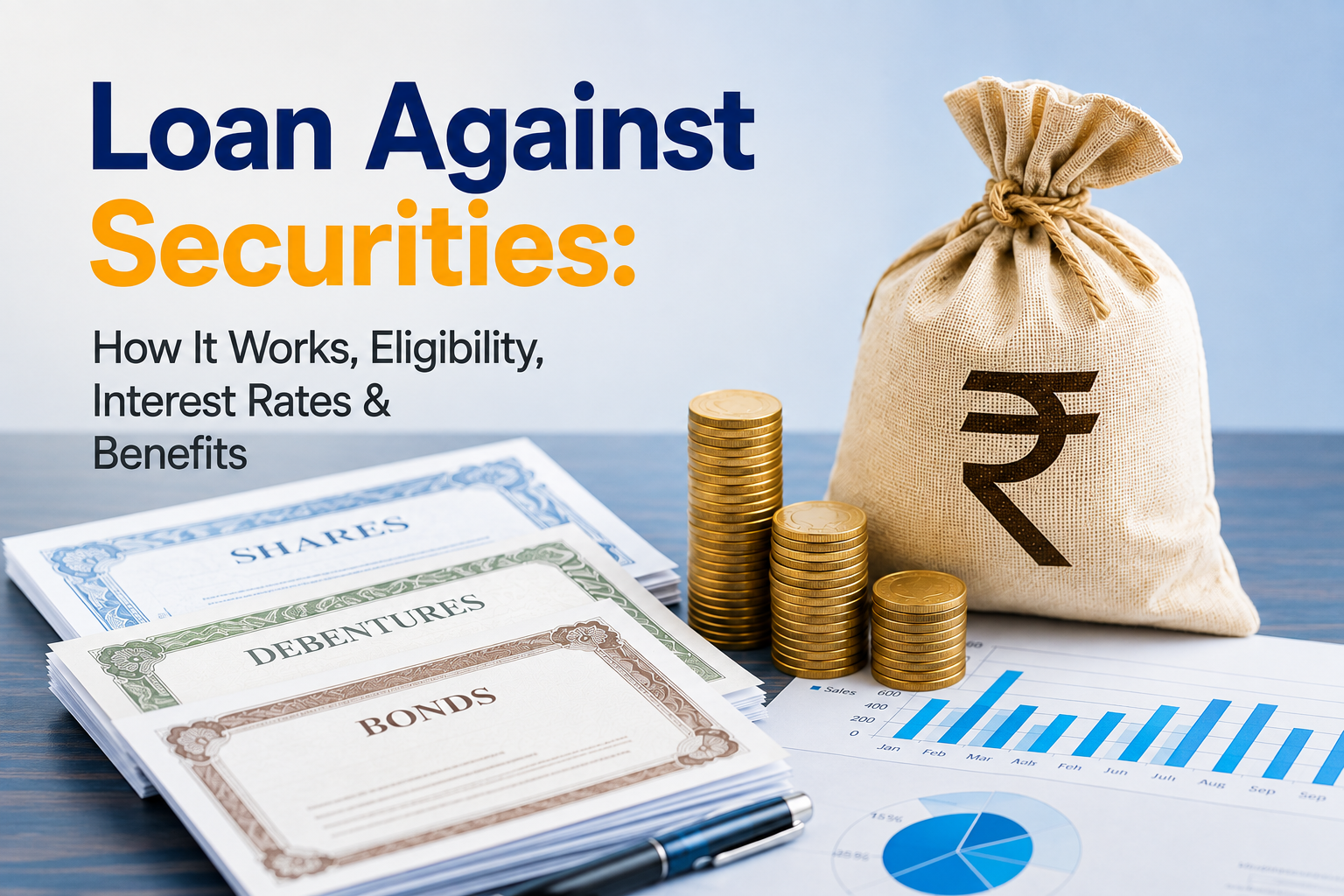
Loan Against Securities: How It Works, Eligibility, Interest Rates & Benefits
What Is a Loan Against Securities?
A loan against securities (LAS) is a secured loan where you pledge eligible investments such as shares, mutual funds, bonds, or other approved securities as collateral to borrow money. Instead of selling your investments to arrange funds, you can use their value to access liquidity.
You can access funds when needed without selling your investments, allowing your portfolio to remain invested while you meet your financial requirements.
The loan amount is generally determined based on the market value of the pledged securities and the applicable Loan-to-Value (LTV) ratio. This makes LAS a useful financing option for investors who have valuable securities but need access to funds for short-term or planned financial needs.
How Does a Loan Against Securities Work?
A Loan Against Securities works by allowing you to pledge eligible investments with a lender in exchange for a loan facility.
The lender evaluates the type and current market value of your securities and determines the loan amount based on the applicable Loan-to-Value (LTV) ratio. Once approved, the funds are made available according to the lender's terms.
The pledged securities remain as collateral until the loan obligations are settled. Since market prices can fluctuate, the value of the collateral may also change during the loan tenure.
When Should You Take a Loan Against Securities?
When you need funds: For planned or short-term financial requirements.
To retain investments: Without selling eligible securities.
With repayment capacity: When repayments fit your financial situation.
When costs are suitable: After comparing rates, LTV, and charges.
Eligibility for a Loan Against Securities
Loan against securities eligibility depends on the lender’s policies, applicant’s profile, and eligible securities offered as collateral.
Common eligibility factors include:
Age: The applicant must fall within the lender's specified age range.
Ownership: The securities should be owned by the applicant and eligible for pledging.
Financial Profile: Income and repayment capacity may be considered by the lender.
KYC Requirements: Valid identity and address documents are generally required.
Eligible Securities: Only securities approved by the lender can be used as collateral.
The exact eligibility criteria may differ from one lender to another.
Documents Required
The documents required may vary depending on the lender and applicant profile. If you are wondering what documents are required for loan against securities, common documents include:
PAN card and valid identity proof.
Address proof and bank account details.
Demat account or investment-related information.
Income or financial documents, where applicable.
Any additional documents requested by the lender.
Providing accurate and complete documentation can help make the application process smoother.
Interest Rates on Loan Against Securities
The loan against securities interest rate depends on factors such as the lender, loan amount, type of securities pledged, applicant profile, and prevailing lending conditions. Since LAS is a secured facility, the interest rate may be competitive compared with certain unsecured loan options.
Borrowers should also consider additional charges such as processing fees, documentation charges, and pledge-related costs. It is important to compare the overall cost of the loan and understand all applicable terms before choosing a Loan Against Securities.
Benefits of a Loan Against Securities
The benefits of a loan against securities make it a useful financing option for investors who require liquidity without immediately selling their investments.
Access to Funds: You can raise funds against eligible investments without selling them.
Potentially Competitive Rates: Secured borrowing may offer competitive interest rates depending on the lender.
Investment Continuity: Your investments can remain held while being pledged as collateral.
Convenient Financing: LAS can be considered for various legitimate financial requirements.
Flexible Borrowing: The eligible loan amount is linked to the value of the securities and applicable LTV.
However, the suitability of LAS depends on your financial needs, repayment capacity, and the terms offered by the lender.
How to Apply for a Loan Against Securities
The application process generally involves a few straightforward steps:
Check Eligibility: Confirm that your securities and financial profile meet the lender's requirements.
Submit Documents: Provide the required KYC, investment, and financial documents.
Pledge Securities: Eligible securities are pledged in favour of the lender as collateral.
Loan Assessment: The lender evaluates the securities and determines the eligible loan amount.
Disbursement: Once approved, the loan is provided according to the agreed terms.
Before applying, compare the interest rate, LTV, fees, repayment conditions, and other terms offered by the lender.
Make the Most of Your Investments with the Right Financing
A Loan Against Securities can be a practical way to access funds without immediately selling your investments. By understanding the loan process, eligibility requirements, interest rates, and benefits, you can make a more informed decision based on your financial needs.
Before choosing LAS, consider your repayment capacity, the value and type of securities you hold, applicable LTV limits, interest rates, and the possibility of market fluctuations. A well-planned approach can help you use your investments effectively while managing your borrowing responsibly.
Looking for a Loan Against Securities? Connect with Rakshitha Finserve to understand your financing options and find a solution aligned with your financial requirements.
Frequently Asked Questions
Can I get a loan without selling my investments?
Yes. A Loan Against Securities allows eligible investments to be pledged as collateral instead of being sold, subject to the lender's terms.
What investments can be pledged?
Depending on the lender, eligible securities may include shares, mutual funds, bonds, and other approved financial instruments.
Is the interest rate fixed?
The interest rate and its structure depend on the lender and the specific loan facility. Always check the applicable terms before borrowing.
Can the loan amount change?
The eligible amount may be affected by changes in the market value of pledged securities and the applicable LTV requirements.